Cyber Forensics: A Complete Guide to Digital Investigation and Evidence Analysis
Understanding cyber forensics, its process, tools, types, and real-world applications in modern cybercrime investigations.
Table of Contents
What is Cyber Forensics?
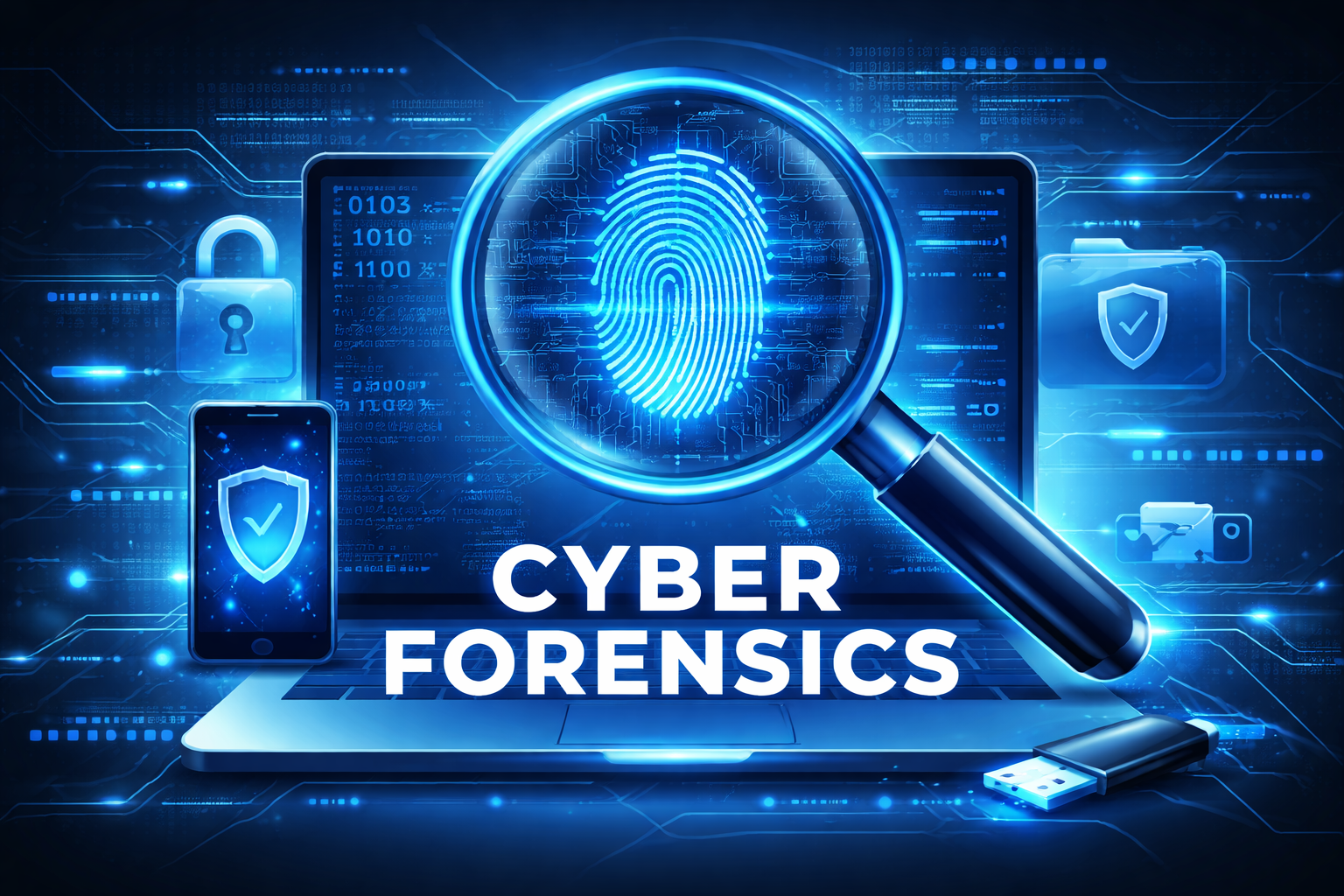
Cyber forensics, also known as digital forensics, is a specialized field of cybersecurity that focuses on identifying, collecting, preserving, analyzing, and presenting digital evidence related to cyber incidents and crimes. It plays a crucial role in investigating cybercrimes such as hacking, data breaches, identity theft, online fraud, cyber stalking, and malware attacks.
In simple terms, cyber forensics is the science of finding and proving what happened on a digital device. The devices involved can include computers, smartphones, servers, cloud platforms, networks, databases, emails, and even Internet of Things (IoT) devices.
The main goal of cyber forensics is not just to recover deleted or hidden data, but also to ensure that the evidence is legally valid and can be presented in a court of law. This makes accuracy, documentation, and integrity extremely important in forensic investigations.
Importance of Cyber Forensics
With the rapid growth of the internet, cloud computing, social media, and online financial systems, cybercrime has become more advanced and widespread. Cyber forensics has become essential for governments, organizations, and individuals to respond effectively to digital threats.
One of the most important reasons cyber forensics is needed is accountability. It helps identify who performed a cyberattack, how it was executed, and what damage was caused. Without forensic evidence, it becomes extremely difficult to prove cybercrime or take legal action.
Cyber forensics is also important for incident response. After a security breach, forensic analysis helps organizations understand the root cause of the attack, close security gaps, and prevent similar incidents in the future.
In addition, cyber forensics supports compliance and regulatory requirements. Many industries such as banking, healthcare, and IT services are legally required to investigate and report data breaches in a structured and verifiable manner.
History and Evolution of Cyber Forensics
The concept of cyber forensics began in the late 1970s and early 1980s when computers started being used for criminal activities. Initially, investigations were simple and involved basic data recovery techniques.
During the 1990s, as personal computers and the internet became more common, law enforcement agencies realized the need for formal digital investigation methods. This period marked the development of standardized forensic tools and procedures.
In the early 2000s, cyber forensics expanded significantly due to the rise of cybercrime, online banking fraud, and corporate espionage. Governments and private organizations invested heavily in forensic laboratories and trained professionals.
Today, cyber forensics has evolved to include cloud forensics, mobile forensics, memory forensics, and AI-assisted analysis. Modern forensic investigations must handle massive volumes of data, encrypted systems, and complex attack techniques.
Core Principles of Cyber Forensics
Cyber forensics is governed by several core principles that ensure the reliability and legal acceptance of digital evidence. These principles are followed globally by forensic professionals and investigators.
The first principle is preservation of evidence. Digital evidence must be collected in a way that prevents any alteration, damage, or loss. Even a small change in data can make evidence invalid in court.
The second principle is integrity. Investigators must ensure that the evidence remains exactly the same from the time of collection to the time of presentation. This is usually achieved through hashing and proper documentation.
The third principle is documentation. Every step of the forensic process must be carefully recorded, including who accessed the evidence, when it was accessed, and what actions were performed.
The final principle is reproducibility. Another forensic expert should be able to repeat the investigation using the same data and reach the same conclusions.
Cyber Forensics Investigation Process
The cyber forensics investigation process follows a structured approach to ensure accuracy and legal validity. Although the exact steps may vary, the overall workflow remains consistent across most investigations.
The process typically begins with identification. In this stage, investigators identify potential sources of digital evidence such as computers, servers, mobile devices, or network logs.
The next step is collection. Evidence is collected using specialized tools and techniques that ensure no data is modified. This often involves creating forensic images of storage devices.
Preservation follows collection. The evidence is securely stored and protected from unauthorized access or tampering throughout the investigation.
Analysis and Examination in Cyber Forensics
Analysis and examination are the most critical phases of the cyber forensics process. In this stage, investigators carefully study the collected data to identify useful information related to the cyber incident.
Examination involves extracting relevant data from forensic images, such as deleted files, email records, browser history, system logs, registry entries, and metadata. Specialized forensic tools are used to ensure that the original evidence remains unchanged.
During analysis, investigators correlate multiple data sources to reconstruct the timeline of events. This helps determine how the attack occurred, what systems were affected, and what actions were taken by the attacker.
The analysis phase often reveals hidden artifacts such as unauthorized access attempts, malware execution traces, file manipulation activities, and data exfiltration methods. These findings are essential for understanding the intent and scope of the cybercrime.
Documentation and Reporting
Documentation and reporting are vital components of cyber forensics. Without proper documentation, even strong digital evidence can lose its legal value.
Investigators document every action taken during the forensic process. This includes details about evidence collection, tools used, timestamps, analysis methods, and findings.
The final forensic report presents the investigation results in a clear and understandable manner. It is written in simple language so that non-technical stakeholders such as legal teams, management, or judges can easily understand the findings.
A well-written forensic report includes an executive summary, technical analysis, evidence references, conclusions, and recommendations for preventing future incidents.
Types of Cyber Forensics
Cyber forensics is a broad field that includes multiple specialized branches. Each type focuses on a specific category of digital evidence and investigation.
Computer Forensics
Computer forensics deals with investigating desktop computers, laptops, and servers. It involves analyzing hard drives, operating systems, file systems, and installed applications.
Investigators use computer forensics to recover deleted files, analyze user activity, identify unauthorized access, and detect malicious software.
Mobile Forensics
Mobile forensics focuses on smartphones and tablets. These devices store valuable data such as call logs, messages, contacts, location history, and application data.
Mobile forensic investigations are commonly used in criminal cases, corporate investigations, and incident response scenarios.
Network Forensics
Network forensics involves monitoring and analyzing network traffic to identify suspicious activities, intrusions, and data breaches.
Investigators examine packet captures, firewall logs, intrusion detection system alerts, and server logs to trace the source and impact of network-based attacks.
Cloud Forensics
Cloud forensics deals with investigating data stored in cloud environments. This includes virtual machines, cloud storage, SaaS applications, and cloud access logs.
Due to shared infrastructure and limited physical access, cloud forensics requires collaboration with cloud service providers and strong knowledge of cloud architectures.
Memory Forensics
Memory forensics focuses on analyzing a system’s volatile memory (RAM). This type of forensics is useful for detecting running malware, encryption keys, and active network connections.
Memory analysis provides real-time insights that may not be available in disk-based forensic investigations.
Tools Used in Cyber Forensics
Cyber forensic investigations rely on specialized tools designed to collect, analyze, and preserve digital evidence.
Common forensic tools include disk imaging tools, data recovery software, memory analysis utilities, and network monitoring solutions.
These tools help investigators perform tasks such as keyword searching, timeline creation, file carving, and malware detection.
It is important that forensic tools are widely accepted and tested, as their reliability directly affects the credibility of the investigation.
Cyber Forensics vs Cybersecurity
Cyber forensics and cybersecurity are closely related fields, but they serve different purposes. Understanding the difference between the two is important for organizations and individuals involved in digital security.
Cybersecurity focuses on preventing cyber attacks before they happen. It involves implementing security controls such as firewalls, encryption, access management, and security monitoring systems to protect digital assets.
Cyber forensics, on the other hand, comes into action after a cyber incident has occurred. Its primary goal is to investigate what happened, how it happened, and who was responsible. It also helps in collecting legally acceptable digital evidence.
While cybersecurity aims to reduce risk, cyber forensics aims to establish facts. Both fields complement each other and work together to build a strong security posture.
Legal and Ethical Aspects of Cyber Forensics
Cyber forensics operates within a legal framework. Investigators must follow laws and regulations to ensure that evidence is admissible in court.
One of the key legal requirements in cyber forensics is authorization. Investigators must have proper permission or legal warrants before accessing digital devices or data.
Ethical considerations are equally important. Forensic professionals must respect privacy, confidentiality, and data protection laws while conducting investigations.
Any misuse of forensic tools or unauthorized access to data can lead to legal consequences and damage the credibility of the investigation.
Challenges in Cyber Forensics
Cyber forensics faces several challenges due to the rapidly evolving nature of technology. Cybercriminals constantly develop new techniques to hide their activities.
One major challenge is encryption. While encryption protects data privacy, it also makes forensic analysis more complex. Breaking or accessing encrypted data often requires advanced techniques and legal approvals.
Another challenge is the large volume of data. Modern systems generate massive amounts of logs and files, making it difficult to identify relevant evidence quickly.
Cloud computing and remote storage also add complexity, as data may be distributed across multiple geographic locations and service providers.
Role of Cyber Forensics in Law Enforcement
Cyber forensics plays a crucial role in modern law enforcement. Many traditional crimes now involve digital evidence, such as emails, messages, transaction records, and online activity logs.
Law enforcement agencies use cyber forensics to investigate cases involving cyber fraud, online harassment, identity theft, and cyber terrorism.
Digital evidence helps investigators identify suspects, reconstruct crime scenes in digital environments, and establish connections between individuals and criminal activities.
Cyber forensics has also improved international cooperation, as digital evidence can link crimes across borders.
Role of Cyber Forensics in the Corporate Sector
Organizations rely on cyber forensics to investigate internal incidents, data breaches, and policy violations.
Corporate forensic investigations help identify insider threats, intellectual property theft, and misuse of company resources.
Cyber forensics also supports regulatory compliance and audits. Many organizations are required to maintain detailed records and investigate security incidents in a structured manner.
By learning from forensic investigations, companies can strengthen their cybersecurity strategies and reduce the risk of future incidents.
Career Opportunities in Cyber Forensics
Cyber forensics offers a wide range of career opportunities for individuals interested in cybersecurity, investigation, and digital analysis. As cybercrime continues to grow, the demand for skilled forensic professionals is increasing across both public and private sectors.
Common job roles in cyber forensics include digital forensic analyst, incident response analyst, cybercrime investigator, forensic consultant, and security analyst.
Professionals can work with law enforcement agencies, government organizations, cybersecurity firms, corporate security teams, and legal consultancies.
Cyber forensics is also a promising field for freelancers and consultants who assist organizations with incident investigations and compliance requirements.
Skills Required for a Career in Cyber Forensics
A successful career in cyber forensics requires a combination of technical, analytical, and legal knowledge.
Strong understanding of operating systems such as Windows and Linux is essential. Professionals must know how file systems, memory, and processes work internally.
Knowledge of networking concepts, logs analysis, and basic cybersecurity principles helps investigators understand how attacks are executed.
Analytical thinking, attention to detail, and documentation skills are equally important. Cyber forensic professionals must present their findings clearly and accurately.
Certifications in Cyber Forensics
Certifications help validate skills and improve career prospects in cyber forensics. They also demonstrate credibility and professional competence.
Popular certifications include Certified Digital Forensics Examiner, Computer Hacking Forensic Investigator, and other vendor-neutral forensic certifications.
Many cybersecurity certifications also include forensic components, making them valuable for professionals entering this field.
Future Scope of Cyber Forensics
The future of cyber forensics is closely linked to advancements in technology. Emerging trends such as cloud computing, artificial intelligence, and the Internet of Things are shaping the evolution of forensic investigations.
Cloud and mobile forensics are expected to grow rapidly as more data is stored and processed online.
Automation and AI-assisted forensic tools will help investigators analyze large volumes of data more efficiently.
As cyber laws and regulations continue to evolve, the role of cyber forensics in legal compliance and digital governance will become even more significant.
Frequently Asked Questions (FAQs)
Is cyber forensics legal?
Yes, cyber forensics is legal when conducted with proper authorization
and in compliance with applicable laws and regulations.
Do I need coding skills for cyber forensics?
Basic scripting and programming knowledge is helpful
but not mandatory for entry-level roles.
Is cyber forensics a good career choice?
Yes, it is a high-demand field with strong growth potential
and opportunities across multiple industries.
Conclusion
Cyber forensics has become an essential part of modern cybersecurity and digital investigations. It helps uncover the truth behind cyber incidents and provides reliable evidence for legal and organizational decision-making.
By combining technical expertise, structured processes, and ethical practices, cyber forensics enables organizations and law enforcement agencies to respond effectively to cyber threats.
As technology continues to advance, the importance of cyber forensics will only increase. For students, professionals, and organizations alike, understanding cyber forensics is no longer optional, but a critical necessity in the digital age.